HONORING NURSES

war nurseThis week marks the end of National Women’s History Month.  I know some folks are pretty tired of designated days and months for every group, but I am enjoying thinking and reading about special women.  Those who fought for the right to vote, advocated for the disabled, pioneered in science and education, and the ones I have known.

Many Red Cross nurses and volunteers were already serving in military hospitals in Europe before the American Army Nurse
arrived.  (Army nurses did not actually have officer status, but had “relative rank” during WWI.  For perspective, women would not be allowed to vote until 1920!).  

 Nearly one hundred years ago, a newly commissioned officer and registered nurse boarded a ship amid a convoy of ocean liners converted to troop ships and crossed with the American
Expeditionary Forces to arrive on the shores of Brest, France.  A year of service, especially the six weeks of intense fighting along the Western Front, would mark her for the remainder
of her life.  She is not on the roster of honorees recognized as women in history this month.  Nonetheless, she is a pivotal person in my life.

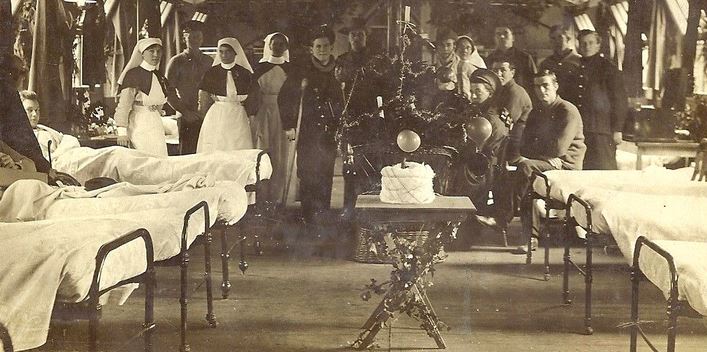
The nurse was my grandmother, Edith Amy Hollindale, and I remember stories I heard as a little girl about that time, as Lieutenant Hollindale cared for wounded soldiers in the tents of Evacuation Hospital 6 during WWI. 

It was the screaming of the dying horses that she could never forget.  The screeching mortar fire could be heard amid the groans of the wounded men. Amy went from cot to cot to ensure the morphine dose was repeated when needed, the fluid
replacement was infusing as it should, and the Dakin’s solution was bathing the wounds that quickly became gangrenous from the muddy trenches.  Her “boys” as she called them, (indeed, so
many of them were still in their teens), watched as she walked among the cots, and the lights were extinguished due to the enemy fire.  Her watch glowed, and she would tell them “Don’t be afraid, I’m right here”; they could see her watch, she was not
leaving them.  Some begged her to go with the others to the dugouts, and be safe.  “No, I am staying here”.  (She was
heard many years later to say “I would not hug the turf”.)  During the heavy artillery shelling, some would beg her to get under their cot.  She was there to celebrate when her patients healed and moved on, and held the hands of those who died.  Amy remained with her wounded and dying patients through many air raids in the battlefields of France. 

The citation of merit from General Pershing hangs on my wall, as does her purple heart.  She was one of three female nurses to receive the purple heart in WWI, not for being wounded, but for “brave and meritorious services”. 

My grandmother never considered that anything she did was heroic, and explained, “The opportunity was there, and I took it”.  I think of so many friends and coworkers-nurses often unheralded, and brave in all kinds of circumstances.  And I am grateful to them all; but in particular to my grandmother, who paved the way for the generations of nurses yet to come.
Posted in nurses are heroes | Tagged | Leave a comment

BEARING BURDENS

burdensThe question is asked in various forms, and goes something like this: “How long do you think she has, then?”  I know the question is coming, and I also know I am limited in my ability to answer with accuracy.  We often say in hospice, “No one has a crystal ball”.

Usually there are “signs” that death is coming soon, things that those of us who work with the dying recognize as the hallmarks, in the weeks before, evidenced as the advancing of a disease process with symptoms that require closer monitoring and managing.  Symptoms like slowly waning appetite; sleeping more with increasing general weakness (most people will end up unable to get out of bed); a need for getting things in order; sometimes spending energy in “life review”; “detachment” with the other-worldly look on the face.  In the days before: less ability to converse and concentrate; inability to swallow; expanding levels of decreased responsiveness; periodic restlessness or anxiety; skin color changes; breathing changes; the diminishing of the human substance of a person.

John asked me the question, and I relayed all the signs that indicated his mother was dying soon.  He couldn’t wrap his head around the fact that only yesterday she was still talking and taking sips and today was not waking up.  Her body was swollen with excess fluid, and her breathing was raspy.  He told me he could hardly stand the suffering that her dying manifested, and I knew he meant mostly for him, the bystander- never easy, to be so helpless at the bedside.  She looked comfortable and peaceful and seemed to be listening to something beautiful outside her room.  He looked distraught and anxious.  I knew as she lay there, the mother of this adult son, that her wish was to not be a burden to him.  I also knew that dying is a kind of burden for us all.  We carry the suffering of watching our loved one diminish, anticipating their death, even as we want another day or hour with them. 

That same day I sat with Belinda as she complained about the TV in her room, and needing some re-arranging of pictures on the wall, and the food she wasn’t fond of, and the ennui that was part of her daily routine.  Her loving family visited constantly but could no longer care for her at home.  She had asked me some time ago, if she forsook her treatment, how long would it be before death was inevitable?  Ah, the question.  I told her for most people, with her particular disease, my best guess would be less than 2 weeks. She looked away and did not discuss this option again.  Her treatment for one disease kept her alive while the cancer dissolved her bones and grew larger tumors.   The slowed progression of the inevitable was her choice, and I knew it was fraught with the likelihood that pain would increase incrementally with every treatment she chose, and I also knew she wanted to eke out as much time as she could. 

Nearly every person who knows they are dying voices this dual concern, how long they have left,  and being a burden to their loved ones.  For those of us who have been with our family members or friends as they died, it is indeed a load we carry, borne with both joy and difficulty; to suffer with them as life ebbs, a worry and a weight we choose to carry, and one we would not shirk.  As the song says, “He ain’t heavy, he’s my brother”.            (song by Bobby Scott and Bob Russell)

The road is long

With many a winding turn

That leads us to who knows where

Who knows when

But I’m strong

Strong enough to carry him

He ain’t heavy, he’s my brother


So on we go

His welfare is of my concern

No burden is he to bear

We’ll get there

For I know

He would not encumber me

No burden is he to bear

We’ll get there

He ain’t heavy, he’s my brother


If I’m laden at all

I’m laden with sadness

That everyone’s heart

Isn’t filled with the gladness

Of love for one another


It’s a long, long road

From which there is no return

While we’re on the way to there

Why not share

And the load

Doesn’t weigh me down at all

He ain’t heavy, he’s my brother

He ain’t heavy, he’s my brother

Posted in end of life care, hospice story | Tagged , , , | Leave a comment

LIFE IS LETHAL

 life is lethalI read the word lethal in a poem, it leapt from the page and I had to stop a moment to consider the impact of the word; for us as humans, for a hospice nurse who watches people in their last hours and days.

So many things are lethal in our lives.  Choices we make in our daily existence are
often lethal.  I spent five and a half hours sitting on an interstate highway where traffic was literally standing still due to weather conditions, and later found out the emergency response agencies in the state described motorists “in a lethal situation”.  I listened as a family member described a loved one’s drinking habits as “lethal”.  I watched a TV show and was inundated with the number of lethal decisions made by the characters in the saga of good versus bad.  I read a note from a social worker regarding a recent patient admission, and the person’s desire to take a “lethal dose” of medication.  I made two visits in the same day to people who were experiencing the last moments of their life’s
lethalness. 

Just like when you buy a new car and everyone seems to have one the same make and model, I heard the word lethal thrown around casually almost daily in a week’s time.

Naturally, this made me curious as to the origins of the word lethal.  So I researched the word, and found that lethal in Latin: “letalis”tanslates equivalent to death (in Greek: lethe, oblivion) the word meaning of or causing death; deadly; fatal. 

And I thought of the human condition, a lethal one

The day we arrive in fact begins our lethal journey in this life.  Although filled with choices that may hasten the lethalness, (such as being stupid enough to stay on a highway with cars careening about!) even with the best of choices made, our lives remain the very
essence of lethal, for every human dies regardless of the life that they live.  This does not fill me with reluctance to live less responsibly, or with utter disregard for the value of this day, but instead makes me want to give today my best, not waste time expecting to
find more tomorrow.  No, like Mary Oliver, I have to ask the question,  

                                  “What will I do with my one wild and precious life?”…. 

Posted in living | Tagged , , | Leave a comment

A CEREBRAL DEATH

a cerebal deathSome symptoms that perplex and challenge the medical professionals that deal with dying patients have terms like “terminal agitation/anxiety” and “spiritual distress” at the end of life.  There are medications to alleviate these symptoms, but not effectively eliminating the tension and angst that accompany dying.  I am reminded of graduate school and my study of Viktor Frankl’s therapy work in existentialism and Logotherapy.  Since that time I have witnessed many dying patients who find deep meaning in their own mortality, and as Frankl said, “When we are no longer able to change a situation-just think of an incurable disease such as inoperable cancer-we are challenged to change ourselves”.

I think of Edward’s death in this light, as a kind of metamorphosis of cerebral dying.

Edward lies in bed and contemplates his life, sharing insights at each visit I make in his last weeks.  At one visit he states, “There is a space between consciousness”….and he
describes dreams he has had recently. He was curled up, in a field, and the wind was blowing, hard. Then he was back here, in his bed, and someone was sitting here.
Waiting.  He wonders about his ethereal visitors and how to interpret these dreams. 
Edward has these esoteric and philosophical discussions at nearly every visit.

He is talking his way through his dying.  

Of late, it seems the physical change has impacted his mental venture; fatigue affecting his intellectual endeavors.  Now we converse about what it means to be dying in terms of his physical exploration.

He describes in poetic form “This is a calm suffering” and says, “ I realize suffering is life, but this is a deep suffering, (pause), also a deep joy”.   Edward describes to me, “There is the breath of life, I can concentrate on breath”.  (I think to myself how Edward’s lung disease makes this statement eloquent.)

I comment, “That first gasp of breath and the last breath; people say they are similarities to birth and death, what do you think?” 

He says with authority, “Birth and death are the same, not opposites.  They’re just different sides of the same coin. The gasp of breath”… a statement he makes, and then
enacts for me. “Is this the end then?” and we look silently at each other for what seems like a long time. 

There are hours and days ahead that are complicated with a restless anxiety that keeps
Edward’s partner up during the nights, worrying for Edward’s safety.  Medications have little effect on his anxiety, and I am aware that Edward is still working through concerns that the spiritual caregiver can’t help him with, that his partner cannot relieve, and that none of us fully understand.

I consider myself extremely lucky to hear what Edward shares with me.  Like listening to the maestro coordinate the melodic sounds of the orchestra, and the sometimes discordant
practice session which becomes the perfect symphony, I watch the transition from the philosophical to the reality of what it is to be human and dying.  A day before his death, Edward lays in his bed after a long discussion with his partner about dying. 

They have saved a couple of questions to ask the nurse. 

I am greeted with, “What will this look like?  How does dying feel?”

And Edward, a little exasperated, says, “She doesn’t know”.

So true. I readily agree…the rest of us who are not dying right now don’t know what it feels like; not yet.  We talk about the shifting and moving from here to there, Edward says he doesn’t believe in “there”, but what “is”…and I suggest that the physical form, what he “is” now, will change.  This physical form is in fact dying, and will be gone soon.

Later that night, Edward said to his loving friend, “I am done now.”  He did not awaken again, and died quietly the next morning.

 A very wise man said:  “We are not human beings having a spiritual experience;  We are spiritual beings having a human experience.”  (Pierre Teilhard de Chardin).                           I think this is what Edward shared with me, the spiritual being in the human form, here for a brief time.  

Posted in death bed vigil, end of life care, hospice | Tagged , , , , | Leave a comment

MOTHER’S DAY

mothers day“What they never tell you about grief is that missing someone is the simplest part.”       From Let’s take the long way home by Gail Caldwell

My beautiful cousin, having nearly reached the hallmark of five years since the death of her precious daughter, wrote these words recently, “I never get used to being without her, never get used to her being away from here”.   Those poignant remarks reminded me of the reality of loss…we will always grieve when someone we love is no longer physically living in our lives… though our lives do go on, even when it seems they might not after losing someone we love.

Our days are filled with grieving and then with surprising joys amid the perpetual sorrow as we carry the memories along with the still place in our hearts where our loved ones rest.

I thought about mothers while I sat with two daughters who had learned of their mother’s advanced cancer earlier that same day and were arranging to care for her during the remaining time with the help of hospice.  As they told stories about their childhood
and some harsh memories of a not-so-dear mother, I said a silent thank you for the blessing of my own mother: her nurturing and loving spirit was a constant that followed me throughout my adult years. The anniversary of my mother’s death is coming up, a decade since she died in peace surrounded by her loving family.
I still miss her.

And I thought of my cousin. The loving care of her daughter Molly all those months of battling cancer epitomized what motherhood is about: selflessness and unconditional
love.  And I remembered Katie’s mother who gave wholeheartedly through the life and death of her little girl, and continues to be an inspiration to other mothers.   And Fiona, who loved as only a mother does- though her newborn son never had the chance to breathe in life.  And all the other mothers I have watched lose and grieve their children.

I have not forgotten these mothers; their love still shines like beacons when I consider what it is to love without reserve, completely, though your heart will break because of it.  Grief remains your companion as you walk through your days without that loving son or daughter physically being a part of life here.

But they are remembered, each of those children -young and old- who blessed their mothers, and whose mothers showed the rest of us how to let go of someone you love but never forget

Today is mother’s day for me, and I can only say to all you mothers, there are jewels in your crowns and your sacrifice is remembered.

Posted in bereavement, family of the dying, grief, loss | Tagged , , , , , | Leave a comment

THE TRAIN WHISTLE

morning trainLying awake and listening to the train whistle in the early morning hours makes me want to get ready for a trip.  It also reminds me of the messages people share as their lives ebb and they prepare for their final journey.

Edna, an elderly woman with some dementia, repeatedly asked for the car keys to get home, and her loving daughter understood the message.  She patted her hand, and let her know she could go whenever she was ready.  I listened to Jack, an old hiker and woodsman, ask about his dog and ready himself for a hunting expedition.  Little Jamie was planning a new trip on his flying pirate ship, and always winning the battles along the way.  Bob, who had built planes for a hobby and flown into his eighth decade, talked incessantly about the skies’ condition and whether it was safe to fly.

“I have to go, I have to go”, and no one asked where, when Viola repeated this mantra in the last few days of her life.  We knew, in the right moment, she would indeed go.

Since I was very young, hearing a train whistle has sent a little thrill within me, and I visualized arriving at some unknown destination. The anticipation of an adventure was hard to contain; though still in my bed I had these images of train hoppers going to other places.  My grandparents lived in a house nearly as old as they were during my childhood years, and the train track cutting the town in half was behind Grandpa’s garden, not many yards from the back door of the house.  The train whistle is an imbedded memory I have of their home, more than the colors on the walls or the rickety old stairway leading to the bedrooms.

How I loved being wakened by that mournful keening sound in the early morning before the light had fully changed things from darkness, and the trees stood like faded grey monoliths outside my dormer window. For me, the train was an omen of future pursuits and bold undertakings.

People have expressed to me in many ways their anticipation of dying, many with dread and avoidance, but some with expectation and even enthusiasm.  As they travel the great
chasm from this life through their death, the journey is described much like the ones they travelled during this lifetime, by boat and plane and car and train…and sometimes we who watch can see the glimmer and sparkle of suspense, and yes, even excitement, as they board the train.

“Life is either a daring adventure, or nothing.”  Helen Keller

Posted in end of life care, hospice story | Tagged , , , | Leave a comment

ANOTHER DAY TO LISTEN

another day

I re-read something I had written years ago, after the death of my mother.  It was titled, “Not just the daughter”, and I remembered the first-hand experience I had, as a family member, of hospice persons presenting themselves as the expert, and myself being reminded to be a daughter, and not a nurse.  I knew then, as I know now, that experiences give us insight, but no one is an expert in someone else’s death.  And no one can assume that a “role” as a family member is contained within the perceptions of what a family member’s abilities or boundaries are.  We bring our whole selves to the death of a loved one, boundaries blur and roles change.

I was reminded of this again, today, as I sat with a family around the bedside of a woman who was ending her days in the hospital, due to extreme pain and restlessness that the family had been unable to manage in the home. 

As I entered the room I took in the scene, a father and adult son and long-time
friend who were slumped in chairs near the bed, and the woman, the object of their focus, now lying semi-covered and very quietly in the bed.  We talked for a length of time, I listened as they told me their hopes for a comfortable and peaceful death, not prolonged by interventions that the medical staff felt should be initiated.  I assured them that the IV medication that had been started today to try to reduce her pain and suffering was not
something that would prolong her time here.

They told me apologetically that she would not keep anything on her, including clothing and oxygen, but I felt a longing to give some dignity to the woman in the room who was nearly naked before us.

I quietly examined her, trying not to awaken a sleeping giant as her quiet repose had only been achieved in the past hour.  As I covered her exposed chest and got to the door of the room to get the hospital staff tohelp position the patient, I heard a muffled laugh.  Entering the room a few minutes later, I noticed the patient was again uncovered from the waist up.  I asked if my effort to cover her had lasted a couple of seconds, and the friend told me, “No, she uncovered herself right when you turned your back, you hadn’t even reached the door”. 

They all chuckled a little, after all, they had warned me and I thought I knew better.  And I couldn’t help but realize, again, that we all are the spectators, we all bring something to the bedside, and each of us must listen to the other, we hospice people and the family members, and ultimately the person who is dying will show us the way, their way, that death will come.

It was just another day, and I couldn’t say “Merry Christmas”, because for them this blend of days at the bedside was much more than a holiday: for them, it was a life time coming to a close as they watched, and a lesson again for me, to listen a little more.

Posted in end of life care, family of the dying, hospice story | Tagged , | Leave a comment

LUCKY TO BE ALIVE

smiling universe

“Flying the friendly skies” is still a slogan, and as I boarded my flight I thought about Albert Einstein’s most important question to ask. “Is the universe a friendly place?”.  I said to myself, “I hope so”… as I put my trust in an airline, a flight crew, some lousy weather and a whole host of people I don’t know.  

The one time I break down and buy a junk magazine is when I forget to pack something to read for a rather long flight.  (I remembered my Kindle as I was about to board the plane, only I visualized it at home charging up.)  Instead, I grabbed the magazine that caught my attention, with a younger woman on the cover. a beautiful smile, and a caption of “I’m lucky to be alive”… a cancer survivor, following a double mastectomy.  A number of famous people have recently been in the limelight as they battle cancer.  

My niece is only famous to those of us who know and love her, but at 34 she has now undergone a double mastectomy, a hysterectomy,  radiation treatment and a year of chemotherapy.  Who would have imagined such a whirlwind of medical intervention when she was celebrating her 33rd birthday?  I am reminded of the fragility of life, and the simple statements that medical professionals make that change everything.  “The tumor is malignant.” “You will need surgery.”  “You will need chemotherapy.”  “You will need radiation.”  And a new favorite…NED.  “No evidence of disease.”  Four simple words that shake your world.


My niece has a young family and a career, and so much to fight for, and live for. I can’t help but think how everything is relative.  What seems like an unfair thing to deal with at one person’s young age, in another person’s life, would be a small miracle to survive to.  Some I have known: The baby boy who lived past infancy but never made it to preschool. The beautiful girl-child who never quiet reached puberty.   The pre-teen who was on hospice, only to survive and actually reach adulthood.  
I am constantly reminded that none of us have a guarantee.  And it doesn’t quite make sense to me, how one person’s life here ends after a few years, or a couple of decades, and someone else is celebrating their 95th birthday this week.  It seems so random.
Yet my niece would tell you what she has learned and shared with the rest of us, tremendous lessons this past year.  It all has meaning. Take nothing for granted.  Live each day, in the knowledge that it is a kind of miracle in itself.  Believe the saying, “Today is the first day of the rest of your life.”  It’s all we really have. The Now.  This moment.
So even though I spent good money and bought a dumb magazine, I thought today about the gifts I can celebrate: health, life, love.  In our own corner of the world, with our sphere of people that care for us, this is today’s miracle.  And yes, I do believe the universe is a friendly place.
Posted in living | Tagged , , , | Leave a comment

No regrets

sunset

Finish each day and be done with it.

You have done what you could.

Some blunders and absurdities

no doubt crept  in,

forget  them as soon as you can.

Tomorrow is a new day.

Ralph Waldo Emerson

What else need I say?

Posted in end of life care | Leave a comment

GIVING HONOR

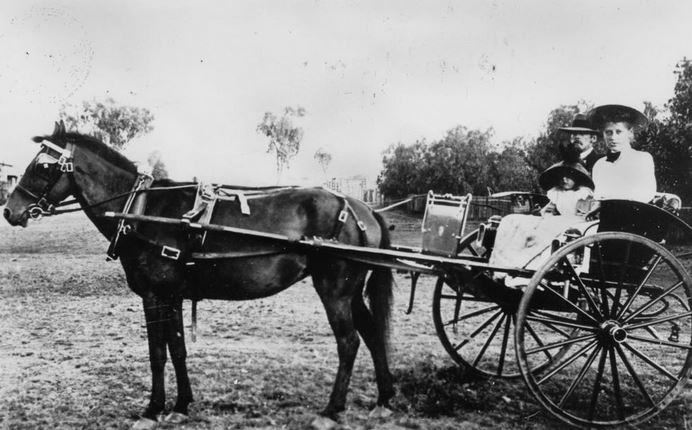
horse and carriageIn later years she lived in her memories.  They encompassed the early years of settling this land that would soon cradle her old bones.  Back then, the horse and buggy was the means of transport.  Then came the gravel road and the model T Ford and the family could make the trip into the city in less than two days (the same trip I took today in one hour).  “Yes,” she would say, “Times were different then”.  Life for her was nestled in the stories of family and this land her descendants still worked.  Her only adult child left, the last of the line, would have to be the story keeper now.

Walking through the old homestead, history leapt out through the pictures hanging in the hall as well as the objects scattered on the shelves.  I’ve had the same sense of ancient life when I’ve wandered in museums, and wondered how many tears and joyful exclamations an object holds captive within its substance; and the same curiousness at an auction or garage sale when I score some treasure that no one else wants to keep, and ask “Why didn’t someone value this”?

I like to believe this lovely woman’s story will live a while longer, though her family line will perish soon enough.  These once strong hands that helped so many, worked alongside her husband of 72 years, and forged a home and then a community from years of toil, will be remembered a while longer, even as they lay still and cool on her bed, already disappearing a little from this life.

The herd of elk, 150 head I’m told, arrives at this time of year to this part of the woods, avoiding the hunters.  Today I watched in awe as they stood like sentinels in the field behind the room that she was laid out in… stalwart creatures paying homage to this early pioneer who didn’t quite reach her 100th year.

Posted in death bed vigil, telling stories | Tagged , , | Leave a comment