LEAVES, GEESE AND OTHER RAMBLINGS

geese

I watched a flock of geese flying into a field and recognized the poignant fact that fall was transitioning into winter.  I sensed a weight of sadness, knowing the individual shimmery colors would be replaced by grey, cold days, and recalled my conversation the hour before, with a woman in her middle years.  She relayed the changes going on in her body, the new symptoms that were the harbingers of her own winter approaching.  She would not reach old age; she knew this. About her hung an air of equanimity.  And the elderly man, nearly a centurion that had happily told me earlier that same day that he was so much better.  His family shared that he never spoke of his dying, and they weren’t even sure that he realized death was approaching.

Yet the signs are evident, easily read by an observer.

I have always loved the fall time, even though I know the shortened days and cooler nights are indeed reminders that winter is just around the corner.  I have the same sense seeing my wrinkled hands, knowing they have changed so much from the days of supple, silken smooth skin.  They tell my own story of aging.  My granddaughter compares our hands and in an epiphany exclaims, “I am young and you are old”.  Unequivocal fact.

Fall moves into winter. Unequivocal  fact.   The furrowed fields and leftover husks are what remains of a harvest of work; planting, watering and gathering, now gleaned by the birds.  A part of me is glad to have the awareness, the reminders to love well today.  I appreciate the geese flying, for that moment in what appeared chaotic movement, but quickly took on a pattern beautiful to behold.  The way our world is arranged is meticulous and magical.  Though I felt a twinge of loss, I was so glad to have the awareness, to consider what the message of the blowing leaves and Canadian geese meant for me today.  Be thankful, be cognizant, sojourn through this life understanding how quickly the days change and don’t miss any of it.

“Yet a few sunny days…and man delight to linger in thy ray.  Yet one rich smile, and we will try to bear the piercing winter frost, and winds, and darkened air.”

November by William C. Bryant

Posted in seasons | Tagged , | Leave a comment

MYSTERIOUS TIMING

romeo and juliet

Some years ago I met a couple who did everything together. I remember the man after discovering his partner of 60 years was diagnosed with terminal cancer, said emphatically,  “I’m terminal, too.”

Perhaps none of us believed him fully.

But a few weeks later, as his wife began the slow breathing of near death, he, too,  showed signs of approaching the end of life, and only six hours after we observed her dying, he joined her. 

We had watched in amazement.  But more than that… with a sense of mystical completeness.  

I have seen many, many people choose their time.  I can’t really describe the phenomena.  There may be some chemical scientific reasons for the how of it, yet to be discovered; but the why of it is clear.  People reach an end point after the tasks here are done.  My mother in law, hearing she had advanced cancer one day and stating to everyone that there were more friends and dear ones in heaven waiting for her, and knowing the rest would be fine, (those of us left behind), said goodbye to her children and sent them off to celebrate the new year.  She quietly died the next morning, with the handwritten note she had written some time before on her calendar, “Hello, 2010”.   She had some internal clock ticking, reached her goal, and that was it. 

Last week I heard family members, while they looked astonished at the slow progression of the dying loved one who kept hanging on for one more day, ask each other what was she waiting for; and they considered the things that could encumber the peaceful passing.  An estranged son that no one had heard from?  The mother held on, day after day, until the phone call that seemed to let her know it would be all right, even though by then she appeared totally unaware of her surroundings. 

Another woman, so gracefully accepting the plans that her adult children made for her in her recent widowhood, seemed overnight to become ready to die.  The out of town children wouldn’t arrive in time to say good bye, so the phone was held to her ear, though no one knew whether she could hear their tearful goodbyes on the other end.  She died just a short time after the last “goodbye phone call”. 

A daughter waited for her travelling father to return home before she peacefully closed her eyes and breathed those last few breaths.

I can’t explain this.  I don’t even try.  It is beautiful and mystical and a part of the sacredness of dying that I find captivating.

“The most beautiful thing we can experience is the mysterious.  It is the source of all true art and science.”  Albert Einstein

Posted in end of life care | Tagged , , , , | Leave a comment

THE CONVERSATION

supper conversation

It seems that our dinner table is the place for all family levity and includes heavy discussions and lighthearted disagreements.  As we pass around the pasta, we begin pounding out our opinion about a medical study, a friend’s Facebook posting, the last family gathering, and a potpourri of other topics.   I can’t help but think about The Conversation Project, and how the discussions about end of life wishes should start at the dinner table.  Yes, I have had the discussions and heard, “Oh, Mom” more than once.  My children, though adults, seem to think death is a long way off.

Maybe.  Maybe not.

That is the whole point in discussing NOW what I want my end of life to look like.  If a time comes and I can’t remind them, they can at least know what I wanted from discussions had long before they stand around my bed in an ICU.  I hope that won’t happen.  But it is an all-too- frequent scenario, happening in every hospital across the country.

I read a recent study that reported more people are dying on hospice services, (though for fewer days); There is also a higher percentage of people spending time in the ICU the last month of their life.  I can’t help but wonder; When is that first conversation about what a person’s end of life wishes happening?  When the palliative care doctor meets with the family members while the patient lies in a hospital bed, non-responsive on the mechanical ventilator in the ICU?  So maybe that person gets to go home on hospice, for a few days, before they die.  Is that really how they pictured their last days and weeks of life?

This is why I talk about it now: to avoid such a scene.  For Helen, it didn’t happen too differently than the above scenario.  At least she was able to say “I want to go home”, and her family could honor that wish.  But only after countless days of tests, intravenous medications, restless nights on a ventilator before she awoke enough to say “No more”, following too many days of unnecessary suffering.  She died only a few days later, at home with hospice care, and so thankful she had been able to have any conversation about her wishes.  I was sorry for her that the dinner table didn’t include THE TALK long before debility and illness caught her off guard.

I read recently about another phenomenon, people having dinner parties and death being the topic of conversation (perhaps this was inspired by the “death cafes” started in Europe where people drink coffee and tea and eat snacks and talk about death).   Quoted from the article, “There is power in speaking about something.”

But for so many, we would rather talk about ANYTHING else, I think. ” Everyone nods their head, yes it is a good thing to do, but talk must be turned into action. (And for every person who expresses their wishes for end of life care, these need to be put in an official document, that’s the next step!)  Not just wishing on a star and hoping it comes true.  Begin now, and have the conversation.

Posted in end of life care, heroic measures, hospice | Tagged , , , | Leave a comment

TO WHIPPLE OR NOT TO WHIPPLE

whipple

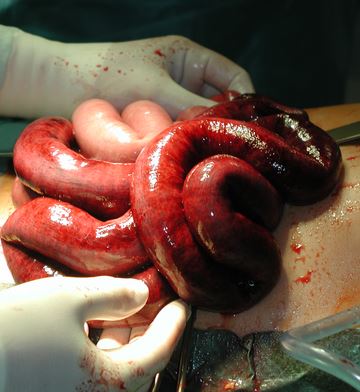
I recently discovered that an acquaintance “has to have a Whipple procedure”.  And I can’t help but think to myself, who says she “has to”? With an average life expectancy of well under a year, I have come to believe this has to be one of the worst statements to hear from a physician: “You have pancreatic cancer”.  Most of us know someone who received such a diagnosis, and likely died within a short time.  Then there are the unusual cases of “outliving” the prognosis.  Maybe a year, or two, or like some of the recipients of the Whipple procedure, perhaps one of the 10- 20% who live to year five.  (The American Cancer Society reports for all stages of pancreatic cancer combined, a 20% one-year survival rate and only 4% survival at year 5.)

I don’t want to dash the hope of someone who is grasping onto a life buoy.  But, as always, I hope that people get to really make their own informed choice.  I can hear the surgeon explain how advanced treatments are now, nearly 80 years after the man whose name, Whipple, created the surgical procedure.  The percent of successful surgical outcomes, the details of a hospital length of stay, and percentages of possible complications post-surgery are shared with a prospective surgical candidate.  The lifeline is thrown out, and who in their right mind wouldn’t swim towards it?

I can’t help but remember Glen.  He was weighing options, and hospice was one of them.  He had taken a sabbatical from a local university and was collecting research to make an “informed decision”.  He asked me very thoughtful questions about what it meant to be on hospice care, and what my experience had been with people dying from pancreatic cancer.  He thanked me, after our tea time, and said he would let me know.  Later, he decided to have the Whipple procedure to hopefully arrest his cancer progression and extend his life.  He underwent a 6 hour surgery and the removal of his gallbladder, most of his pancreas, a portion of his stomach and a major section of his duodenum, with some odd lymph nodes thrown in. 

The five year survival rate for persons with his stage of pancreatic cancer still remains at a grim 5%, and I was saddened that Glen only survived a little over two years.  I sat with him again, two months before he died.  He told me then, “I wish I hadn’t had the surgery, and had opted for just making the most of my time.  It’s been hell since my surgery.”  He still managed to eke out good days, and had loving friends and family at his bedside when he died, though he suffered significant pain and maintained to the last moment that he should have made a different decision than to have the surgery. 

Another man, Fred, had not been given a choice for surgery.  His cancer was far too progressed to be offered the Whipple procedure.  He told me when I first introduced him to hospice that he planned to live a lot longer than six months and “look death straight in the eye”.  He lived for 13 months after his initial diagnosis, much longer than his doctor had predicted.  He, too, suffered pain and disability.  I saw him relish his days and never heard him express regret for his lack of surgical treatment.

For every one who receives a cancer diagnosis, their journey begins with that fateful conversation with the physician.  The shock and dismay at hearing the “C” word is followed by an avalanche of medical terminology and treatment possibilities that simply boggles the mind.  I am thankful that people can do so much research on their own, having internet access to blogs, medical websites, scholarly articles and clinical studies. 

But like any conversation about what is possible and having “all the cards laid out”, I hope people hear that a “Whipple” procedure, or any other procedure, may be one option, not THE option.  And I hope that truthfulness and kindness are the chief ingredients of all the conversations. And I hope that all the possibilities are weighed, including a choice to not do surgery, radiation or even chemotherapy, and regardless of the choices, to make life count now, to choose the treatments that a person wants to undergo with the knowledge that quantity of days is not necessarily better than quality of days, nor are they mutually exclusive of each other, and fighting or choosing to accept are not polar opposites.  To Whipple or not to Whipple, that is not the only question.

Posted in heroic measures, whipple | Tagged , , , | Leave a comment

A Hospice patient’s Bill of Rights

bill of rights

A Hospice patient’s Bill of Rights

I have the right to die the way I  choose to.

I have the right to all the information about my disease/condition that is collected by my
medical team.

I have the right to the relief of pain and other suffering.

I have the right to full informed consent about every
treatment option.

I have the right to express my end of life wishes.

I have the right to be heard.

I have the right to have my express desires honored.

I have the right to complete my end of life tasks by being
provided necessary information to do this.

I have the right to be attended by the people I wish at my
bedside.

I have the right to die a good death.

Posted in end of life care | Tagged , , , | Leave a comment

Laughter IS the best medicine

laughter

Sometimes humor creeps in when the situation least appears funny. 

I suggested to Jean that the rest of the family suffered along with her, and she told me to go away, get the hell out, and said a number of other unrepeatable comments to all of us.  Jean’s loved ones had been up all night, worried she would fall from the edge of the bed where she had parked herself, legs too swollen and weak to hold her upright.  I had thought we could appeal to the universal worry of every patient, i.e., being a burden to loved ones. 

I was wrong.  She let me know-quite clearly- that she didn’t care about any of them, she wanted everyone to leave.  I thought of my old cat.  He had always been standoffish, and as he died he spent his last days scratching and biting at whatever was within reach.

“People die the way they have lived”:  We’ve all heard it said.  In my experience, this is true.  The people who have spent less time on their relationships, with many of them strained or estranged, have not suddenly developed some sensitive, communicative style at the end of their days.  So it was with Jean.  She had been in charge, been “a control freak”, and pushed people away all her adult years.  It was painful to be an observer as she struck out at everyone in her last days.  Nothing seemed to help her ease into dying.

Medical marijuana requires a number of hoops to jump through in Oregon (unlike my patients in Washington, who had been able to take a prescription to a legal store to buy what they wanted).  For Jean, the paperwork would take too long and be too cumbersome; at one visit she let me know there was a neighbor who would supply it.  We laughed at the time, her daughter and I, and said that we didn’t need any more information. 

We had to call for “back up”,  with a plan to treat Jean’s terminal agitation at the local hospital.  Her daughter took me aside, as Jean was being transported by the medics, smothering a chortle while she told me that Jean said under her breath, “Someone must have reported me”, (having smoked a joint earlier in the week): thinking that was the reason for the burly men who arrived in uniforms to take her away. We didn’t correct her misconception.

The EMT in charge was a muscular, darkly handsome man who told Jean that his name was Mac and he would like to relieve her pain with some medicine.  I was amazed, all of us having tried for hours, unsuccessfully,  to help Jean in any way, when she allowed an IV to be placed, and the medicine she received began to smooth her pained face, and relax her muscles.  As she went out on the gurney, her granddaughter made the comment, “I was going to tell Mac I felt faint, too”…..and we looked at each other, convulsed in laughter, even in the face of so much sadness and hurt.

Life had given us a comic relief moment, and I was thankful for that.

Posted in controlled substance, end of life care, laughter | Tagged , , , , , , | Leave a comment

SMILE

happiness

As I sat listening to a great jazz rendition of the song “Smile”, I saw Ella in my mind’s eye.  I met her just briefly- in the middle of a humble living room, lying in her hospital bed, pale as the sheet over her… but a smile on her face that lit up her eyes, and an infectious laugh that enveloped her granddaughters, while the last of her living siblings held her hand as tears dropped onto it.

She was taking care of the rest of us, and I learned from her family, this was the hallmark of her whole life: caring for everyone around her.  Even at the end of her life, she was spreading a smile to dispel some of the sadness.   I left her home with the thought, “Here lies Ella, practicing random acts of kindness.  You are beautiful”.

For Ella:

Smile, though your heart is
aching

Smile, even though it’s breaking

When there are clouds in the sky

you’ll get by

If you smile through your fear and sorrow

Smile and maybe tomorrow

You’ll see the sun come shining through

for you

Light up your face with
gladness

Hide every trace of sadness Although a tear may be ever so near

That’s the time you must keep on trying

Smile what’s the use of crying

You’ll find that life is still worthwhile

If you’ll just

Smile

(by
C. Chaplin, J. Turner, G. Parsons)


Posted in death bed vigil, laugh | Tagged , , , , | 2 Comments

THE WEDDING PLANNER

wedding planner

I imagine she looks like she is dying now…..no one other than family members are allowed in to see her these final days.  She was a friend a long time ago, and became more distant over the years, as she fiercely battled stage 4 cancer, undergoing every imaginable type of chemotherapy.  Her spouse, also a cancer survivor, gave her constant hope and encouragement to sign up for the next trial, and the next.  She was still young and beautiful then, but of course to me I will always imagine her beautiful, since I still visualize her from the first time we met.

I was the nurse, and she was a friend of a patient that I was admitting to hospice.   Jill and Beth had met at a cancer support group.  Although Jill could eat very little and was in the last 3 weeks of her life, this beautiful person named Beth, like some ornate bird, swooped in with a box of gourmet food and proceeded to fix a plate and engage in a lively conversation. Jill sat in her recliner –her eyes gently closed with a slight smile on her face, as though taking a nap on the beach, listening to children’s laughter, instead of being admitted to hospice on this grey winter day.  It was as if happiness walked through the door when Beth did.   I was captivated.  We all were: by her stunning smile and her excited energy. Later, I found out she was battling her own demons: herself a cancer survivor.  Over the days and weeks to follow, she and I became fast friends, as you do when sitting together at a dying person’s bedside. 

Years have gone by since then, and Beth and I think of each other but don’t spend time together.  I am a little feared- perhaps not the grim reaper himself, but certainly representing hospice: which means to so many people, giving up, and all about the dying.  I keep thinking more people are aware that hospice is not just saved for the very end, but provides the team: the people, the resources, and the philosophy of preparing for death.  I consider myself more of a marriage planner than a divorce attorney…this is about preparing for the biggest moment of your life…Death.  Not about how to get out of the moment unscathed… we will ALL experience this big day.

So I sit with myself, saddened to hear that Beth spent weeks in the hospital having every manner of treatment to stall the tumor growth that was eating away her insides.  For many months, the chemotherapy rounds had proved ineffective.  At that last hospitalization, according to her spouse, Beth’s doctor fleetingly mentioned hospice.  But too late

She spent days in pain and agitation that a hospice team would have addressed preemptively.  She suffered in a vacuum of defeat that a hospice spiritual caregiver might have helped her conquer, having seen so many who had to transition from fighting with every cell in their being to transitioning into peaceful acquiescence.  No, hospice was not invited in, to encourage the organizing of details and preparing for the event. 

When I spoke to Beth’s husband on the phone, very close to the end of her life, he made the statement, “She asked me a couple nights ago; Where did we go wrong?  Why is this happening?”  He answered, it was the cancer.  I recalled the line in The Yearling….            “Life goes back on you”.  It’s not just the cancer, it’s life.                                                                It’s now Beth’s big day.   I just wish I could have been her wedding planner.

Posted in end of life care, hospice story | Tagged , , , , , , , | 1 Comment

EXPERIRI

agenda

We have a saying in hospice, “Leave your agenda at the door”.

This is just a simple way of reminding each other to remember whose death it is that we are following, and who is in charge.  I often tell people, hospice workers are not the “experts”.  Experiri, from the Latin, means “try”.  To be an expert, one must have tried the experience.   None of my co-workers have died in order to become real experts.  We can say we have some knowledge, gained by being the spectators of others as they approach death.   But I always worry, that having this view of ourselves as more knowledgeable than others, we run the risk of not paying attention, being complacent, thinking perhaps we’ve seen this before and know the outcome.  Never can a person’s dying be considered by rote, and never can someone who is not experiencing the dying totally know what the experience entails. 

A common question patients have asked me, in one form or another, is “What will it be like?”  They are asking me what I have seen, what might be expected, looking to be forewarned perhaps of the things they fear may happen.  I can answer that question honestly, with “I don’t know”….and discuss only what I have seen at the death bed of others.  Being surprised is what keeps me humble, and reminds me to never feel like I have the right answer or the right way. 

Like all things in my life, I am reminded to keep trying.  Keep moving forward, knowing there are yet things to be accomplished and experience to be had.

“The most beautiful sea has yet to be crossed.

The most beautiful child has yet to be born.

Our most beautiful days have yet to be lived;

and the best word that I wanted to say to you

is the word that I have not yet said.”

Nazim Hikmet

Posted in end of life care | Tagged , , , , , , , | 2 Comments

REMEMBERING THE STORIES

unique as a snowflake

I often want to say thank you to the people that have shared their last moments with me.  I made this statement the other day, “Every death I’ve been at is such a unique experience.”

“Really?”  My husband asked me and I elaborated about this perception of mine.  Yes, I said, just as in birth, all of us enter this world in a form recognizable and nearly the same, yet each mother and infant are totally unique.  Every person’s story, both their birth and death, is uniquely theirs’.  I often consider the many, many deaths that I have been a part of.  The things that hospice nurses talk about and teach, to prepare families for the signs of imminent death: breathing changes; skin color and temperature changes; reaching a place of minimal responsiveness or a coma-like state; the escaping of the dying soul into some other realm, while we watch them withdraw from this life; these things are experienced universally and this is how we are able to describe the dying process.

But the story, Ahhh, that is so different for every one

Who is there, to grieve the passing? What regrets and joys are remembered? How tenacious is the person’s hold on what is now? How much preparing have they done…the thoughtful anticipation of actually dying, with a sense of waiting, and perhaps feeling “ready”?  And what do I learn as I watch the letting go?

This is each person’s very own tale. I see faces, beautiful and terrible, of my patients.  To name a few of the masks of the dying: fear, dread, anticipation, anger, depression, despair, excitement, sadness, agitation, apprehension, frustration, suffering, shock, surprise, dismay, resentment, bitterness, joyless, joyful, courageous, woeful, tranquil, resolute, exultant, serene,  peaceful and even satisfied.  Perhaps my favorite: a woman who died only a few weeks following the news from her doctor that her cancer was so widespread,
he had no advice except: “Go home and prepare to die”.  She did both, prepare and die, in a swooping magical ride that ended with a glorious smile on her face, after she breathed no more.  Yes, beautiful

I think of the Dr. Seuss book, “Oh, the Places You Will Go…” How fortunate I have been, to have seen the many faces and shared the many stories. 

Uniquely theirs, those final days and hours.

 “You’re
off to Great Places!

Today is your day!

Your mountain is waiting,

So… get on your way!”

                                                                        Dr. Seuss

Posted in death bed vigil, unique | Tagged , | Leave a comment