FINDING FUN

blurred colorful lights

Yes, I actually heard this, “Let’s put the fun back in funeral”.   WOW!  How does that look?  I thought of a few “fun” memories of my own. 

A woman who was amazingly talented in theater, as she planned her memorial, wanted it to be a “big party”, and that is exactly what happened; right down to theatrical performances by her many friends, hilarious and outlandish stories, party favors and wine overflowing. 

A young girl never grew up as she’d dreamed- to be married at the beautiful lodge that smelled of jasmine and sea air.  But she was remembered at that beloved place by all that knew and loved her, with cakes and flowers and music and fireworks, where tears and laughter joined together and we all watched in awe as the “mother of the bride” greeted us in silk-suit finery.  I was certain the woman-child whose funeral wish had been granted in that lovely place was watching from heaven and smiling.

A baby’s ashes, whose life never even began, were placed in a tiny marble urn. We shared birthing pictures, massive quantities of food and brave, sad, silly stories as we dug a hole, and looked out over the pond where the ashes would rest.  A tree was planted, and the urn would nourish the tree so it could grow and bring comfort to parents whose arms were empty but had hearts full of the love we all glimpsed.

A garden, with colors of the rainbow blooming for birds and butterflies, was scattered with the ashes of the woman whose hands had tilled the soil and planted as if she painted the landscape from Monet’s pallet. Her friends played music and sang songs of remembrance, some rollicking and some with great pathos, and drank too much wine. The roses and peonies would bloom years later, though she no longer cared for them. Others would walk the garden path and be awed by the beauty. 

A man’s life had ended too abruptly and with no forewarning.  His ashes were taken by his wife and sons and sent out in paper boats that were lit as they sailed off, taking away some of the melancholy and leaving behind a sweet memory of flitting light bursting into flames and flowing water.

A bench, just a simple reminder of a man’s life whose final wish had been “no funeral” was perched on an outcrop of rock, overlooking a vast body of water with gulls crying and boats disappearing out on the distant horizon. Many a weary person would sit there and be refreshed in years to come as they gazed out at the blue horizon. 

My sisters, as we planned my mother’s funeral, all putting on mom’s Mumus and red lipstick in her honor, and having my brother wear one, too, and telling some ridiculous and amazing stories about her life amid many happy and sad tears and so much riotous laughter.

Webster’s definition of fun: what provides amusement or enjoyment; specifically: playful often boisterous action or speech.  I think of the effervescent singing, some with raucous bands and often unique instruments and DJs, the telling of stories, sharing of pictures, near hysterical laughter and crying without restraint, the funny and sad and beautiful all mixed up together, and suddenly the fun in funeral is not so preposterous after all.

Posted in celebrating death, family of the dying, letting go | Tagged , , , , | 2 Comments

GOBLINS AND WITCHES

witch“Tis a fearful thing, To love what death can touch”                                                                           (Judah Halevi)

Today I hear stories about the baba yaga or “vedma”.

This is something I never heard about as a child, but I immediately understand
the horror she must inspire in the hearts of children.  I’m told the baba yaga is a shriveled old crone, who flies through the air on a mortar while navigating with a pestle; she lives deep in the forest in a whirling dervish of a hut that is balanced on bony chicken legs with windows like eyes, and strange things in the cupboards.  Although this gnarled old woman with freakish grey hair is meant to terrify, they explain to me some consider her also wise, and the guardian of the fountain of life and death.   Ivan laughs evilly (if this is even possible with his sweet smile and twinkly eyes) and says, “She hasn’t gotten me yet”, which inspires Katrina to shake her finger at him and scold, “You’re not going because I can’t be here without you”.  Ivan is not fearful, but doesn’t want to leave quite yet.

These unveiled comments seem like glaring fist shaking at the vedma.  You can’t have him.     No, not yet.

My next visit is with a woman who has dreams of loathsome things, dark objects that inspire stabbing fear during the night.  Her suspicion-filled eyes glance around the room. 

Sometimes we use medications that curtail “hallucinations” and sometimes
I realize the shuddering terrors that we learn as children are the precursor to
the unspoken perils we face as an adult…We share so many common fears: when my children were young, I worried something could happen to me before they were grown.  Now that they are grown, they worry that something will happen to me before they are old.  Fears prey on us, no matter our years in life.

I have had a lot of practice watching the dying process, which shapes my
perceptions and maybe even skews my view of things a bit. Perhaps the
experience of seeing death visit in so many ways makes me believe that in the
end the baba yaga of our childhood is just a little old woman, wizened up and
not pretty to look at, but full of wisdom and only planning to guide us through
the forest, through the dark places, into the light.

Like Howard, Kathy, Bill and Lisa and so many others, who shared with me the visits that their dead mothers and grandmothers made to them in those “dreams” before they breathed their last breaths…those visits weren’t scary to them.  Those aged, well-worn and loving hands were reaching out to show them the way…

Posted in end of life care, telling stories | Tagged , , | Leave a comment

THE FACE OF DYING

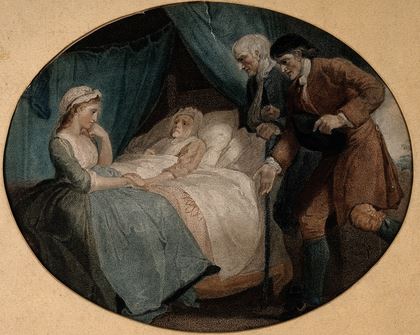
old womanMarge lay dying in her bed while her daughter waited for the end.  Her face
had slowly shrunken in over the last few days, looking thinner and paler and
what could only be described as a shadow of her previously rosy round face, the
beautiful skin with wide, mirthful eyes and ready smile- gone.  Now her eyes were mostly closed, except for an occasional fluttering with only a fixed gaze and her mouth remained open with the slow shallow breaths of a dying woman. 

I recognized the hesitancy of her daughter to spend much time at the bedside of her mother, struggling with this bedside vigil alongside the specter of the dying.

Artists of all kinds over the years have depicted death.  The grim reaper illustrates our most latent fears: deep darkness suffused with languishing and shriveled face draped in flowing robes reaching like tentacles ready to grab the unsuspecting.  The word itself, death, immediately conjures the horrific.

How different I realize my picture of dying is!  I have seen many faces relaxed in peaceful repose those last days of dying, without suffering spread across their brow…more of a “composed waiting”.  But time almost stands still for a loved one, as the minutes turn into hours and the hours turn into days…

This is what it was for Marge and her daughter.  Marge had been dying incrementally each hour of this last week, until her hand no longer responded to being held, and her body instead lay captive as the last of her breaths ebbed oh-so-slowly. 

How does one “normalize” the face of the dying?  I knew even as I explained to her daughter how the muscles relax, and a person no longer maintains their facial expressions at the end of life, that seeing this face on your loved one would never seem “normal”.  The gaping mouth and closed dusky eyelids with uneven breaths and then no breaths, the occasional staring look: this is what dying looks like.  It can cause layers of discomfort for someone who has not witnessed it.  It is so
unlike how we shape our façade of saying “Hello, how are you?” with a carefully
practiced expression….instead:
 a face suddenly vulnerable as the conscious becomes the unconscious. 

I think those of us observing death have fears of what we see in that naked face of our loved ones as they die, visualizing our own death and the letting go of life here…

“That furious desire to hide that abject nakedness which we bring here with us, carry with us into operating rooms, carry stubbornly and furiously with us into the earth again.”* 

That face. 

This dying woman’s face, because I had known her these past months, still reminded me of our many visits talking about her life before she became a shut-in, her dry sense of humor, her enjoyment of simple things in her day, but it was also apparent she was less here with us then in the other realm she now traveled.  Her face showed me how little she cared now for what was left of this earth.  Her daughter laid a kiss on that face before Marge breathed her last breath, her face now fully relaxed with just the glint of a smile across it.

*As I lay dying, by William Faulkner


Posted in death bed vigil, end of life care, hospice story | Tagged , | Leave a comment

THE PEACE PROJECT

american eagle

Some things really “level the playing field”.

Dementia is one of those things. 

The wandering thoughts of the brilliant become as uninspired as those of the dullest. 

A man who advised United States’ presidents and developed national policy lays in his bed at the end of his days, with the same perplexing questions we will all have, only his are voiced through the haze of slowly dissolving cognition. No longer able to comprehend so much of what happens in his day, he cannot remember if he ate breakfast and is uncertain how to use a straw in a glass.  But he says to me, after the other nurse and I have finished re-positioning him, “I am really done with this project.  This project has just become too much”. 

What project you might ask? …Well, I suspect it is this task of dying.  For the world renowned person, or the “ordinary” person, dying shatters the calm and prepared…ready, or not…  For the person with dementia, I believe there
remains as well a sense of the dying process as the end approaches. 

Every person seems to have a “knowing”

All the accomplishments of a lifetime and one must face death like every other
human…

Death- the other leveler of persons. 

After ensuring my patient’s comfort and some moments of questions regarding his needs, (and receiving mostly befuddled answers), when I asked what I could get for him, the one-word reply was “Peace”.

Clearly, he is more aware than any of us know.

 Through the labyrinth of tangled thoughts, the simple need is expressed.  Peace- something we all wish for, today and certainly at the end of our lives.

And, yes, he died with peace pervading.

Posted in end of life care, hospice story | Tagged , | 1 Comment

TEA AND PIG’S FEET

teaPig’s feet, I think to myself, while I accept the plate of aspic offered- one of the joys of home nursing: accepting hospitality graciously!  I have had tea, coffee, cookies, seaweed and many other morsels, but pig’s feet- this is a first!  Thank God the little feet are not visible, just the meat lovingly picked from the bones, and I am told the horseradish is
a must to bring out the flavor. Surprising myself, it’s tasty in a strange way, not something I will order from a menu at my next opportunity, but the childish pleasure on my host’s face as I told her it was quite good was pretty spectacular.  (Katrina had assured me I
had probably never had this dish before.  She was right.)   

A friend of mine has told me about her first years in Africa, and some of the bowls of unrecognizable food in dirt-floored rooms prepared by loving hands, and how appreciative she learned to be, of all offerings. 

Food for many of us is a way of nurturing and caring for each other.  It’s one of the reasons families struggle so much when their loved ones begin eating less and less.  Anyone who is dying slowly will have the natural progression of diminishing appetite, until they stop eating all together.  I have had countless conversations with concerned family members, explaining how the body stops being able to assimilate food as the end of life approaches.  Nonetheless, this is a hard transition to make.  We show how much we care when we
cook a special dish for someone.

Over the past weeks, at each of my visits to Ivan’s home, have been welcomed, always offered tea, and asked the series of question;  Have I eaten yet? Do I need anything? Will I try this?  I am continually reminded of the givers in the world, people who in their nature want to do for others.

Regardless of explaining to them that they don’t need to worry about me, and certainly don’t need to make ME tea, they are quick to care for me.  I am trying to re-train them so
that they will let ME make the tea… And bring the cookies.

Posted in end of life care, family of the dying | Tagged , | Leave a comment

MEMORIES OF THE WAY WE WERE

russian couple

We will remember …scattered pictures of the smiles we left behind, Smiles we gave to one another…… the way we were  (The Way We Were, by Alan/Marilyn Bergman)

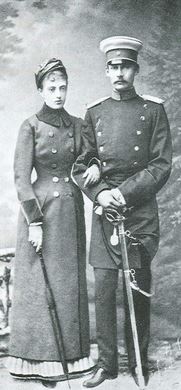
Today Ivan, who is ninety, reminisces about his papa, because today is the anniversary of that great man’s death. Though it has been many years ago, they think of him on this day, and so many days throughout the year.  He was an admirable man that had to flee Russia with his family, and lived the remainder of his life working at a job far beneath his upbringing and education. 

Like many immigrants, his abilities and training went unrecognized in this new country… “non-transferable skills.”  Many times, over the years of performing what most considered menial work, when someone would exclaim “How hard this must be to work at something so below your prior station in life!”, he would congenially reply, “It is the work that is beautiful”, implying that all work when done with loving intent is beautiful.

They proudly show me pictures and I think to myself as this man is honored in both his son’s and daughter-in-law’s memories, that he must have been a very special person.  Like his son, Ivan. 

 We drink tea, and Ivan tells me stories about his childhood and young adult years, and his dear wife helps fill in details that his early dementia seems to blend together. I ponder the stories that every life holds, and how little we know of each other as we go along our merry way each day, often not stopping to pause even a moment to pay attention.  My own family stopped listening to many of my mother’s stories as she aged, thinking they had heard them numerous times before. 

The oral history of families, of lives completed years before our own: many of these stories totally forgotten, since no one cared to listen.  How priceless
the stories of our lives!  I wonder who will listen as we age and become home-bound, too feeble to engage in the social gatherings… our stories fading with our eyes and our memories shaking like our hands? 

I have this sublime opportunity, listening to Ivan’s and Katrina’s  life
stories, to know them and their shared  history a little more with each visit, and am awed by the strength and beauty in this elderly couple.  

And each time I visit them, I wonder …can they possibly be any kinder?  They worry for me, it’s too breezy out and I didn’t bring a coat.  Watch the steps on my way out.  Be careful driving. They wave from the front porch, the two of them smiling and blessing me as I drive off in my car, carrying a few precious memories with me.

Posted in hospice story | Tagged , , | Leave a comment

THE HEART STEALERS

sad cupidI ducked my head under a canopy of gnarled and overloaded candy-pink rhododendron branches as I came up the sagging steps to the front door and rang the bell.  I waited.

After a bit, an elderly woman answered, breathless and slightly flustered from hurrying out of the bathroom, and apologizing in her heavy Russian accent, “I didn’t wash my hands, oh dear.  You must be Amy, we have heard all about you and are so happy you are here”….and grabbed my hand to take me inside. (Oh well, I thought, so much for the hand-washing!)  She is explaining a number of things as we walk into their bedroom and I am trying to follow her rapid discourse.  She rouses her spouse from lying on their shared bed.  He is as white-haired as she, and as openly innocent and smiling.  The room is darkened, and he had only just settled in for an afternoon nap.  While apologizing for his flannel pajamas, he insists on coming out to sit with us. 

They proceed to tell me some of their story.  Harsh it
may be, but in the telling it is often punctuated with statements like, “I was lucky” or “so many had it worse than me”, speaking of the second World War and their years living with privation and fearfulness, and finally arriving in this country, where “everyone is so good to each other”.   At some point during our visiting, the doorbell rings, and she slowly toddles to the front of the house.  She is gone for a while; almost to the point that I feel I should go see if she is okay.

Then she comes back to join us,  and answers her husband’s query with , “Oh, it was just Dave” (explaining to me that he comes by about once a week, needing a little money, she often gives him five dollars and sometimes he will do something for the gift, but she gives it without the expectation that anything comes in return.) 

Oh my lord, I think to myself, these people are ripe for a shyster!  But then she remarks on the many people that
have helped and supported them through the years, some during desperate times…so many good people… and she is so happy to have an opportunity to give to someone less fortunate.

Jesus, I think.  They are like Jesus.

They are celebrating their 68th year together soon, and he says to me “When you are connected like us, you do everything one after the other” and I have a sense he is telling me more than the fact that they finish each other’s sentences. 

I’ve received two new recipes and an invite to a picnic before the end of my visit. We drink tea together, and as much as I want to stay and just listen to her sing-song voice and his sweet endearments to her, I realize I still need to see another patient.  I get ready to leave.  He reaches out and grabs my hand, and I receive a kiss on it.  “Is it time for you to go, then?  What will you do?” When I tell him I have another person to see, he asks if they will kiss my hand, and I assure him they will not.  “Oh, here’s one more then” and I get my second kiss of the day.

I had been warned by my social worker that this couple would “steal my heart”.  Too late, I remembered what she had told me
and realized I left a big piece of it in their living room.

Posted in end of life care, hospice story | Tagged , , , , | 2 Comments

WOLVES AND WOUNDS

feed the wolfThis past week, not far from where I live, someone in a fit of rage killed a number of people he didn’t even know.  An enraged daughter called her mother’s physician because the hospice nurse (me) wouldn’t make her mother comply with a specific assessment which the daughter felt was necessary. I also received an announcement of a “brand new miniature human”.   What do these three things have in common, you question?  My ramblings on this:

I can’t help but wonder, what makes a person so angry and irrational that they would arbitrarily take someone’s life? Inconceivable.  I’m certain that person must be in some hell of their own making, to feel so much hatred and commit such a heinous act.  But we rarely know a person’s whole story.  How does a little miniature human, who started out so soft and innocent, become a raging vicious lunatic? 

By degrees, I think.  By allowing ourselves the opportunity to ferment inside; letting the evil, sad, cruel wounds that mar the soft skin of our life become wounds that stagnate, fester and grow into something so monstrous that we can no longer refrain from striking out to hurt others. The story of the two wolves is an apt description of what happens to the soft miniature human.

An old Cherokee was teaching his grandson about life and said to the boy:

“A fight is going on inside me, It is a terrible fight and it is between two wolves. One is evil-he is anger, envy, sorrow, regret, greed, arrogance, self-pity, guilt, resentment, inferiority,
lies, false pride, superiority and ego.”

“The other is good-he is joy, peace, love, hope, serenity, humility, kindness, benevolence, empathy, generosity, truth, compassion and faith.

He told his grandson “The same fight is going on inside you and inside every other person too”.

The grandson thought for a minute and asked his grandfather:

“Which of the two wolves will win?”

The grandfather answered:

“The one you feed.”

Back to the unhappy daughter…  I had a visceral response to this daughter’s complaint:  a burning anger.  She obviously felt I wasn’t giving enough credence to her suggestion and needed to go “over my head” to get something done.  I obviously felt her need to have this assessment done was in direct opposition to her mother’s need to express autonomy.  Who is in charge here, I asked myself?  (And then answered my own question: not me!)

I recognized this daughter’s need to grasp control in an ever changing environment.  Her mother has been dying by degrees and the hospice nurse isn’t able to prevent it.  All
these emotions colliding and we can’t find the means to communicate what we really
need to; a way to speak and listen, with compassion and patience. 

Feeding the wolf is an ever present reality, and we all have daily occurrences of little offenses, hurts, unmet needs and fragile emotions that can mark us (but also remind us which wolf we want to feed).

Her mother died three days after her distress over the things that were changing and out of her control.  She was not there, but I was able to describe to her the beautiful and peaceful expression on her mother’s face. 

Yes, we all have our own wounds to heal.

Posted in end of life care, family of the dying, hospice | Tagged , , | Leave a comment

REGRETS

regrets

Is it actually possible to live a life without regret? I like to think so: at least to have only minor, insignificant regret.

I watched Sally dying slowly, with her daughter providing most of her care as her needs increased incrementally over many weeks.  Her son lived in another state, but he made occasional visits.  As the time approached to the last days of her life, and her body showed signs of death approaching, her daughter continued to be the primary care giver, day in and day out doing more and more personal things for her mother who had always been so
independent and even distant.  Sally now lay mostly inert in the bed while 
her daughter’s gentle hands and voice cared for her. 

Sally’s son made numerous excuses why he kept postponing what looked to be the last visit, but finally at a hospice nurse’s encouragement, he made the trip.  His sister had said how he feared being here, possibly because he didn’t want to see the reality of his mother dying.  After his arrival, the next day at my visit, I asked the daughter how her brother fared the night before, finally seeing his mother.

“Oh, he got in quite late, so he didn’t want to come over. He’s doing work from
my home today….oh yes, he knows she could go anytime”.  She proceeded to tell me about his great divide: the desire to be here yet concurrently the total abhorrence to come through Sally’s bedroom door.

That was a Friday.  I didn’t expect to see this patient again, so I said my quiet goodbye to her, and wished her a happy Mother’s day, I was certain even in her barely responsive state it would be a little happier now with her two children nearby. 

The next Monday, I was rather shocked to see Sally’s name on my visit list.  She survived the weekend. I headed over first thing in the morning, and as the door opened, the daughter’s whispered voice met me with, “I think she just took her last breath”.  She had indeed. 

We took care of some immediate things, and sat down together.  This daughter had counted the days on hospice, many more than she had imagined looking back those months ago when her mother was diagnosed.  So many passages, things you never imagined having to experience, and now the reality that this person is gone.  As her mother continued to linger, she’d expected her to die on that special day designated for all mothers, nonetheless “mom did everything in her own way, and she did this well, too.”

Then she told me of her conversation that last night together with her brother. They stayed up through much of the night, thinking this was the last honor they could bestow on their mother.  He told his sister as they spoke quietly in the living room, “I regret not having spent more time with her. I really regret that. What was I doing, not coming up?  Why did I do that?”  His sister tried to provide some comfort, and insight, but was glad she would not feel that same remorse.  In her wisdom, she had not pressed or accused, recognizing his need to stay away- his own way to deal with his mother’s death- and she hoped he would later forgive himself a little. 

I wonder, is it possible to live a life without regrets?

We gain strength, and courage, and confidence by each experience in which we really stop to look fear in the face…We must do that which we think we cannot.      

Eleanor Roosevelt

Posted in death bed vigil, end of life care, family of the dying | Tagged , , , | Leave a comment

BEACH TREASURE

little women

For me,there is nothing as precious as the sound of women laughing and crying together: the voices of my childhood. All the years growing up in a household of mostly women, the occasional squabbles or petty annoyances were always washed away in the laughter and tears of our sisterhood. How can you stay angry with someone who is the same person that causes you to have fits of such belly-shaking laughter that your sides literally hurt and your voice is hoarse from the hours spent talking over each other, (always miraculously understanding all three conversations at once as they happened simultaneously?)

The music of my sisters returned this past weekend at our annual beach “butterfly gathering”….. (the sisters who became mothers who are now grandmothers all come together-the mothers and daughters and nieces and cousins). We had a three month old male representative at our girl’s weekend this year, and his rare cry was soothed by the steady waves of voices sometimes soft and at times raucous, with arms out-stretched in our shared motherhood. As we talked about our lives and told our old and more recent stories, the relationships of years forged through hardship and sadness and joy and separateness always feels newly
polished to me, a precious metal that sometimes turns a little dull with the burdens of life and time spent apart.

Our last night together, we sisters talked quietly among ourselves (not within earshot of our daughters because we know they don’t want to have this conversation). We are aware that one of us will die first, we each dread this reality and joke together about not wanting to be the last left, and how hard it will be for us when the first goes. We talk about what we want those remaining to know; and how we want to be celebrated; and where we want our ashes spread; and how we want our pine box painted by all our loved ones; and taking care of the sister’s children left behind; and how outrageous the wake should be. It’s a little surreal, this conversation, yet as life hurries by, we each of us have a sense of the necessity. Maybe we have another 30 years of coming together; maybe this was our last. No one dwells on this fact. But the
unpredictability of life causes us to know that this precious time together
cannot be taken for granted.

I sit back and watch the young mothers, our daughters, who will teach and love their daughters, and I appreciate that years go by, in a whisper and a hand-breath, but relationships are something golden. They often become a bit tarnished; they may suffer wear and tear and even require repair work now and then.

They are the treasure found in this life.

“Perhaps this is the most important thing for me to take back from beach-living: simply the memory that each cycle of the tide is valid; each cycle of the wave is valid; each cycle of a relationship is valid…one should lie empty, open, choiceless as a beach—waiting for a gift from the sea.” 

 (Anne Lindbergh, Gift from the Sea) 

Posted in end of life care | Tagged , | Leave a comment